

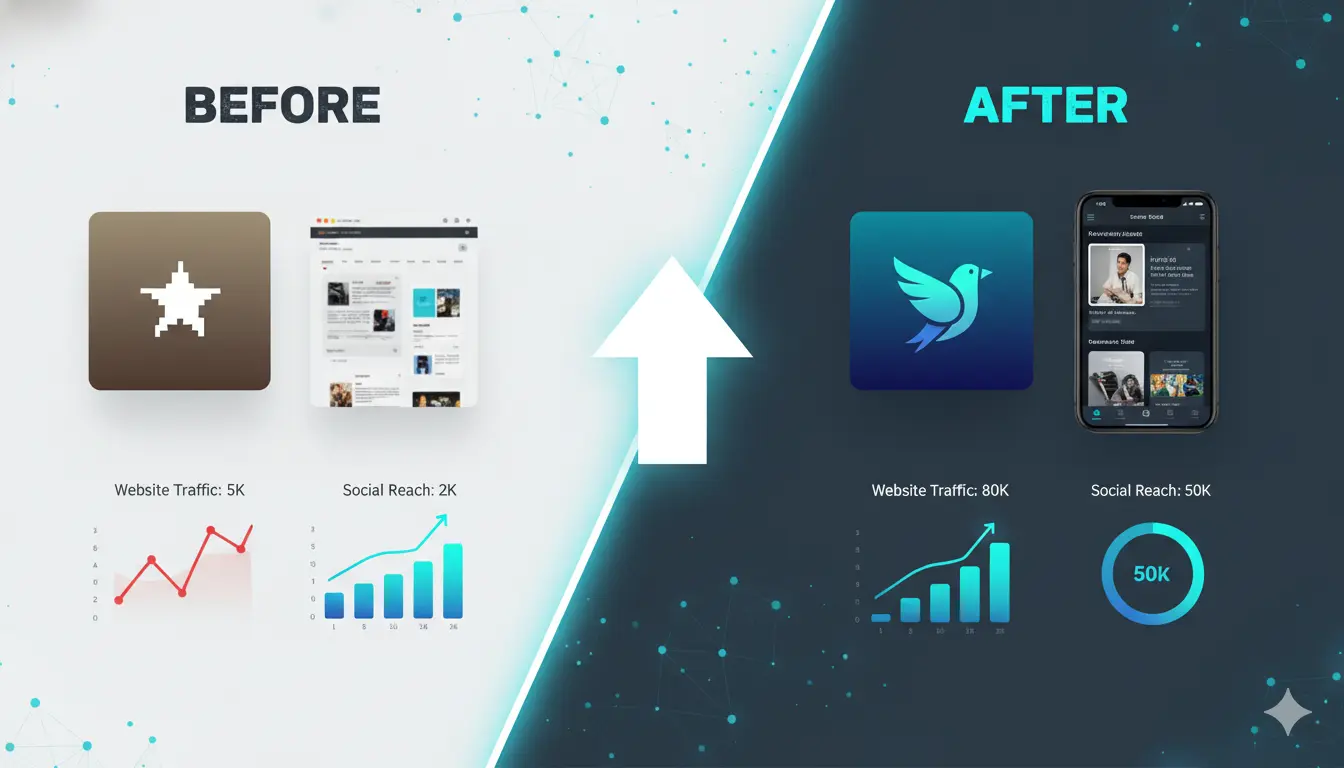
Introduction: The Critical Role of Visual Communication in Modern Marketing
In an era characterized by information overload and shrinking attention spans, visual content serves as the primary mechanism for cutting through digital noise and capturing audience attention instantly. Research from MIT indicates that the human brain processes images 60,000 times faster than text, with visual information retained at significantly higher rates than verbal content. This neurological reality makes strategic graphic design not merely an aesthetic consideration but a fundamental marketing imperative that influences brand perception, builds emotional connections, and drives measurable business outcomes.
Strategic graphic design transcends basic visual appeal to become a sophisticated communication tool that conveys brand values, establishes credibility, guides user behavior, and ultimately influences purchasing decisions. Organizations that invest in professional, data-driven design consistently outperform competitors in brand recall, customer engagement, and conversion metrics. This comprehensive guide explores how to leverage graphic design as a strategic marketing asset that delivers tangible ROI and competitive advantage.
The Psychology of Visual Marketing: Understanding How Design Influences Perception
Color Psychology and Strategic Brand Palette Development
Colors evoke powerful emotional responses and cultural associations that can significantly impact brand perception and consumer behavior. Understanding color psychology enables marketers to select palettes that align with brand personality and marketing objectives while resonating with target audience preferences.
Red communicates energy, passion, urgency, and excitement—making it effective for clearance sales, food brands, and entertainment. Blue conveys trust, stability, professionalism, and calm—ideal for financial services, healthcare, and technology brands. Green represents growth, health, nature, and prosperity—perfect for environmental causes, wellness products, and financial growth messaging. Yellow evokes optimism, warmth, creativity, and caution—suitable for creative industries, children’s products, and attention-grabbing calls-to-action.
When developing your brand color palette, consider cultural context, industry conventions, competitor differentiation, and accessibility requirements. Create a comprehensive system including primary brand colors, secondary accent colors, and neutral supporting tones with clear usage guidelines for consistency across all touchpoints.
Typography Psychology and Strategic Font Selection
Typography choices communicate brand personality and influence readability, comprehension, and emotional response. Different typeface categories convey distinct brand attributes: Serif fonts (Times New Roman, Georgia) suggest tradition, reliability, and authority—appropriate for luxury brands, academic institutions, and established corporations. Sans-serif fonts (Helvetica, Arial) communicate modernity, simplicity, and approachability—ideal for technology companies, startups, and contemporary brands. Script fonts convey elegance, creativity, and personalization—effective for wedding services, artisanal products, and luxury experiences. Display fonts create distinctive brand personalities but should be used sparingly for headlines and logos rather than body text.
Develop a typographic hierarchy that establishes clear visual relationships between headings, subheadings, body text, and captions. Specify font families, weights, sizes, line heights, and spacing for each text element to ensure consistency and readability across all marketing materials.
Visual Composition Principles and Psychological Triggers
Strategic application of visual composition principles guides viewer attention, creates emotional impact, and enhances message retention. The Rule of Thirds divides the frame into nine equal sections, positioning key elements at intersection points for balanced, dynamic compositions. Visual Hierarchy uses size, color, contrast, and positioning to establish importance and guide the eye through content in logical sequence. White Space (negative space) provides visual breathing room, reduces cognitive load, and emphasizes important elements. Balance and Symmetry create stability and harmony, while asymmetry generates energy and visual interest. Repetition and Pattern establish rhythm, reinforce branding, and create cohesive visual systems.
Understanding Gestalt principles—proximity, similarity, continuity, closure, and figure-ground relationships—helps designers create compositions that feel unified and intentional rather than chaotic or arbitrary.
Building a Cohesive Visual Identity System
Comprehensive Logo Design Strategy and Implementation
Your logo serves as the cornerstone of your visual identity, functioning as the primary visual identifier across all brand touchpoints. Effective logo design requires strategic consideration of brand values, target audience, industry context, and practical application requirements.
Develop multiple logo variations including primary logo, secondary logo, icon/monogram, and responsive versions optimized for different contexts (social media avatars, favicons, app icons, etc.). Establish clear guidelines for minimum size, clear space requirements, color variations (full color, monochrome, reversed), and prohibited modifications to maintain consistency and integrity.
Consider the technical requirements for digital applications including vector formats (SVG, EPS), raster formats (PNG, JPG), and animation capabilities for digital environments. Ensure your logo scales effectively from business card size to billboard dimensions without losing legibility or impact.
Comprehensive Brand Guidelines Documentation
Brand guidelines serve as the definitive reference for maintaining visual consistency across all marketing materials, internal communications, and partner collaborations. Comprehensive guidelines should include detailed specifications for logo usage, color palette with CMYK, RGB, HEX, and Pantone values, typography system with web and print font families, imagery style guidelines, iconography standards, and layout principles.
Include practical examples demonstrating correct and incorrect usage, templates for common marketing materials, and contact information for brand management inquiries. Distribute guidelines to all internal teams, external agencies, and partners to ensure consistent brand representation across all channels.
Visual Asset Management and Distribution Strategy
Implement a centralized digital asset management (DAM) system to organize, store, and distribute brand assets efficiently. Categorize assets by type (logos, images, templates, videos), include metadata for easy search, and establish version control to prevent outdated materials from circulating.
Provide team members and partners with appropriate access levels and usage rights. Consider creating a brand portal with self-service access to approved assets, reducing administrative overhead while maintaining quality control.
Designing for Different Marketing Channels and Platforms
Social Media Graphics Optimization Strategy
Each social media platform has unique technical requirements, audience expectations, and content consumption patterns that demand tailored visual approaches. Instagram favors high-quality, visually striking imagery with consistent aesthetic themes. Facebook accommodates a mix of image types but prioritizes native video and carousel formats. Twitter emphasizes concise, impactful visuals that complement brief text updates. LinkedIn values professional, informative graphics that support thought leadership content. Pinterest requires vertical, inspirational imagery optimized for discovery and saving. TikTok and Reels demand dynamic, full-screen video content with bold text overlays and trending audio.
Create platform-specific templates that maintain brand consistency while optimizing for each channel’s unique characteristics. Develop content calendars that plan visual assets in advance, ensuring consistent posting schedules and strategic alignment with marketing campaigns.
Email Marketing Visual Strategy and Best Practices
Visual elements in email marketing can dramatically improve open rates, click-through rates, and conversion metrics when implemented strategically. However, email design requires careful consideration of deliverability, accessibility, and cross-client compatibility.
Design responsive email templates that adapt to various screen sizes and email clients. Use alt text for images to ensure message clarity when images are blocked. Maintain a healthy text-to-image ratio (approximately 80:20) to avoid spam filters. Implement clear, prominent calls-to-action with sufficient contrast and tap targets for mobile users. Test emails across multiple clients and devices before deployment to identify rendering issues.
Personalize email visuals based on recipient data, behavior, or preferences to increase relevance and engagement. Use dynamic content blocks that display different imagery based on subscriber segments, location, or past interactions.
Website and Landing Page Visual Design Strategy
Visual hierarchy on websites and landing pages directly influences user behavior, conversion rates, and overall user experience. Strategic design guides visitors through the conversion funnel while establishing credibility and communicating value propositions effectively.
Above-the-fold content should immediately communicate your unique value proposition with compelling headlines, supporting imagery, and clear calls-to-action. Use visual cues like arrows, contrasting colors, and directional imagery to guide attention toward conversion points. Implement trust signals including testimonials, client logos, security badges, and social proof prominently throughout the page.
Optimize page load speed by compressing images, implementing lazy loading, and using modern image formats. Ensure accessibility through proper color contrast, alt text, and keyboard navigation support. Conduct A/B testing on visual elements to identify what resonates best with your audience and drives higher conversion rates.
Advanced Graphic Design Techniques for Marketing Impact
Infographic Creation Strategy for Content Marketing Success
Infographics transform complex information into digestible, visually engaging formats that improve comprehension, retention, and shareability. Effective infographics combine data visualization, iconography, typography, and narrative structure to tell compelling stories that establish thought leadership and generate backlinks.
Start with clear objectives and target audience analysis to determine what information will provide the most value. Structure content logically with a clear beginning, middle, and end. Use data visualization best practices including appropriate chart types, clear labeling, and meaningful color coding. Maintain visual consistency with brand guidelines while creating distinctive, memorable designs.
Promote infographics through multiple channels including social media, email newsletters, guest posting opportunities, and influencer outreach. Create embed codes to encourage sharing and backlink generation. Track performance metrics including views, shares, backlinks, and lead generation to measure ROI and inform future content strategy.
Motion Graphics and Animation for Enhanced Engagement
Animated visuals capture attention more effectively than static images, with studies showing that motion graphics can increase engagement by up to 30% compared to static alternatives. Strategic use of animation enhances storytelling, explains complex concepts, and creates memorable brand experiences.
Types of marketing animations include explainer videos that simplify product or service benefits, animated logos and brand marks that add personality to digital touchpoints, animated infographics that bring data to life, social media animations optimized for silent viewing with captions, and interactive animations that respond to user interactions.
When creating motion graphics, maintain brand consistency in visual style, color palette, and typography. Keep animations concise and purposeful—avoid excessive motion that distracts from the message. Optimize file sizes and loading times for web delivery. Consider creating both full-length and shortened versions for different platforms and attention spans.
Interactive Visual Content Strategy for Maximum Engagement
Interactive elements transform passive content consumption into active participation, creating more memorable experiences and generating valuable user data. Interactive visual content includes quizzes and assessments that provide personalized recommendations, calculators and configurators that help users evaluate options, interactive infographics that reveal additional information on click or hover, 360-degree product views and virtual tours that provide immersive experiences, and augmented reality filters and effects that encourage user-generated content.
Design interactive elements with clear value propositions that motivate participation. Keep interactions simple and intuitive to minimize friction. Provide immediate feedback and results to maintain engagement. Collect user data ethically with clear privacy policies and opt-in mechanisms. Promote interactive content through multiple channels and encourage sharing to maximize reach and impact.
Measuring Design Effectiveness and ROI
Key Performance Indicators for Visual Content Marketing
Track quantitative metrics to measure the impact of your visual marketing efforts and justify design investments. Engagement metrics include likes, shares, comments, click-through rates, time on page, and social media reach. Conversion metrics track how visual content influences business outcomes including lead generation, sales, sign-ups, and revenue attribution. Brand metrics measure awareness, recall, sentiment, and perception changes over time. Efficiency metrics evaluate production costs, time-to-market, and resource allocation across different visual content types.
Implement UTM parameters and conversion tracking to attribute specific visual assets to business outcomes. Use analytics tools to understand which visual styles, formats, and distribution channels perform best with your target audience.
A/B Testing Visual Elements for Data-Driven Optimization
Systematic testing of different design variations helps identify what resonates most effectively with your audience and drives better business results. Test individual elements in isolation to understand their specific impact: headline variations and value propositions, image styles and subject matter, color schemes and contrast levels, layout structures and visual hierarchy, call-to-action placement and design.
Use statistical significance calculators to ensure test results are reliable before implementing changes. Document learnings from each test to build institutional knowledge about what works best for your specific audience and objectives. Implement winning variations and continue testing new hypotheses to drive continuous improvement.
User Feedback and Qualitative Research Methods
Complement quantitative data with qualitative insights gathered through user interviews, focus groups, surveys, and usability testing. Direct feedback reveals the “why” behind behavioral patterns and uncovers opportunities that analytics alone might miss.
Conduct design critiques with cross-functional stakeholders to gather diverse perspectives on visual effectiveness. Implement feedback mechanisms within your digital properties to capture real-time user reactions and suggestions. Monitor social media conversations and reviews for unsolicited feedback about visual elements and brand perception.
Future Trends in Marketing Graphic Design
AI-Powered Design Tools and Automation
Artificial intelligence is revolutionizing graphic design workflows, making professional-quality visuals more accessible and efficient to create. AI-powered tools can generate design variations, suggest color palettes, create custom illustrations, and optimize layouts based on performance data.
Emerging capabilities include automated content creation at scale for personalized marketing campaigns, intelligent design systems that maintain brand consistency across thousands of assets, predictive analytics that recommend design optimizations based on audience behavior, and generative AI that creates original visual content from text prompts.
While AI tools enhance productivity and accessibility, human creativity, strategic thinking, and emotional intelligence remain essential for developing authentic brand voices and meaningful visual narratives.
Augmented Reality and Immersive Brand Experiences
Augmented reality technology creates interactive brand experiences that blend digital and physical worlds, offering new opportunities for engagement, education, and entertainment. AR applications in marketing include virtual product try-ons for fashion, cosmetics, and home decor, interactive print materials that come to life through mobile devices, location-based AR experiences that enhance physical retail environments, and branded AR filters and effects for social media campaigns.
Develop AR experiences that provide genuine value to users rather than mere novelty. Focus on solving real problems, enhancing product understanding, or creating memorable brand interactions. Ensure AR experiences are accessible, intuitive, and optimized for various device capabilities.
Sustainable and Ethical Design Practices
Eco-conscious design choices resonate with environmentally aware consumers and demonstrate corporate social responsibility. Sustainable design practices include minimizing file sizes and data usage to reduce energy consumption, choosing eco-friendly printing materials and processes for physical materials, designing for longevity and timelessness rather than short-term trends, and creating inclusive, accessible designs that serve diverse audiences.
Communicate your commitment to sustainable design through transparent messaging and authentic actions. Partner with environmentally responsible vendors and suppliers. Measure and report on the environmental impact of your design operations and continuously seek opportunities for improvement.
Conclusion: Design as a Strategic Marketing Asset
Strategic graphic design transforms marketing from mere information delivery to compelling visual storytelling that builds emotional connections, establishes credibility, and drives action. By understanding visual psychology, developing cohesive brand systems, optimizing for different channels, implementing advanced techniques, measuring effectiveness, and staying current with emerging trends, businesses can create visual marketing assets that deliver measurable ROI and sustainable competitive advantage.
Invest in professional design talent, establish clear brand guidelines, implement data-driven optimization processes, and integrate design thinking throughout your marketing organization. For comprehensive guidance on building high-converting digital experiences, explore our detailed resources on conversion-focused web design and social media marketing strategies to create integrated visual marketing campaigns that drive results.