
“AI will replace jobs.”
You’ve probably heard this statement hundreds of times over the past few years. It has become one of the most debated topics in technology, business, and education. Every week, new headlines claim that artificial intelligence is changing the workforce forever. Some predict massive job losses, while others believe AI will become the greatest productivity tool ever created.
But after watching how people actually use AI every day, I’ve come to a different conclusion:
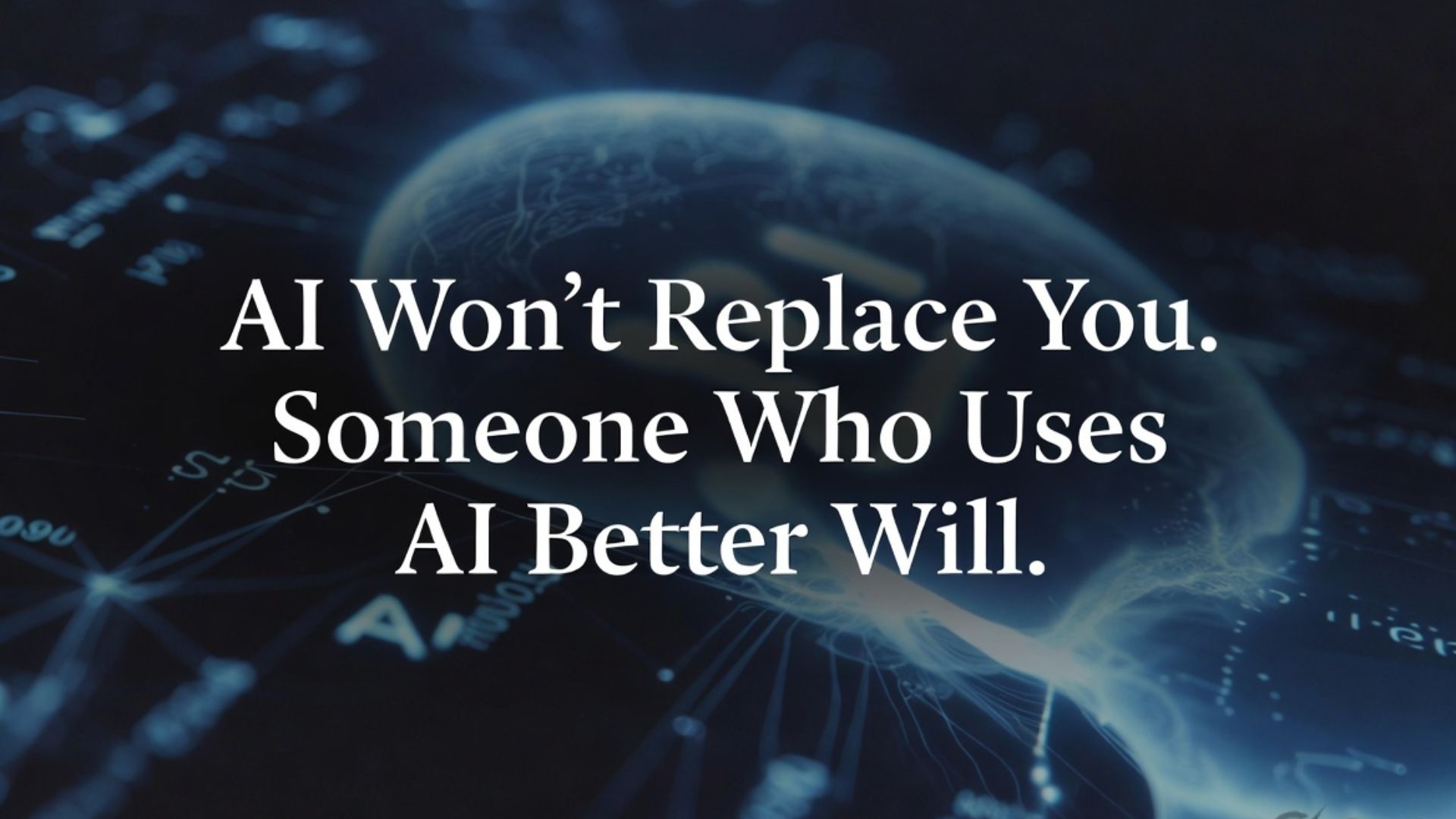
AI isn’t replacing people. People who know how to use AI effectively are replacing those who don’t.
There’s a significant difference between the two.
AI Is Everywhere, But Mastery Is Rare
Today, AI is no longer a niche technology used only by software engineers or data scientists. It’s everywhere.
A ten-year-old with a smartphone knows what ChatGPT is. College students use AI to summarize notes. Designers generate concepts in seconds. Developers write code with AI assistance. Marketers create campaigns, business owners draft proposals, and customer support teams automate repetitive conversations.
Tools like ChatGPT, Gemini, Claude, Grok, Midjourney, and many others have become part of everyday life. Knowing what AI is has become as common as knowing how to browse the internet.
But here’s the problem: Knowing about AI is no longer a competitive advantage. Everyone knows about it.
The real question is: Do you know how to use it well?
And that’s where the gap begins.
AI Literacy Is Common. AI Proficiency Is Still Rare.
Think back to when Microsoft Excel first became popular. At one point, simply knowing how to use spreadsheets made you valuable. Over time, Excel became a basic workplace skill. Today, nobody gets hired just because they know how to open Excel. Companies care about what you can actually do with it.
AI is following the exact same path.
Right now, millions of people proudly say, “I use ChatGPT every day.” That’s great — but so do millions of others. Simply opening ChatGPT doesn’t make someone more productive.
Just like:
- Opening Photoshop doesn’t make someone a designer
- Owning a camera doesn’t make someone a photographer
- Buying a guitar doesn’t make someone a musician
The tool has become accessible to everyone. The skill hasn’t.
The Difference Between Using AI and Working With AI
Imagine five employees given the same task: Create a social media campaign for a new product.
They all open the same AI tool. They all have the same access. Yet after thirty minutes, the results look completely different.
One gets generic copy. Another gets cliché-filled content. Some spend most of their time rewriting AI’s output. But one employee delivers a polished campaign — complete with audience targeting, multiple variations, ad copy, email sequences, and creative ideas.
Same AI. Same company. Same assignment. What changed? The person using it.
AI doesn’t just answer questions — it responds to communication. The quality of your output depends heavily on the quality of your instructions.
Why Most People Still Use AI Inefficiently
Many people interact with AI the same way they search Google: type a short sentence, copy the result, and move on. Then they wonder why the output feels generic.
Professionals approach AI differently. They:
- Provide rich context
- Define clear objectives
- Assign specific roles
- Describe the audience
- Specify tone and constraints
- Refine through multiple iterations
They treat AI less like a search engine and more like an experienced colleague.
A Small Change in Words Can Change Everything
Consider this simple example when creating an image:
Weak prompt: “Keep the ratio 4:5.” Better prompt: “Change the ratio to 4:5.”
Just two words different — but the AI interprets the intention completely differently. This principle applies to writing, coding, marketing, analysis, and almost every other field.
The best AI users don’t necessarily know more about technology. They know how to communicate more clearly.
AI Doesn’t Think Like Humans — That’s Why Precision Matters
Humans naturally fill in missing context. AI doesn’t. If you ask a colleague to “make this presentation better,” they understand your company, audience, and style. AI knows none of that unless you tell it.
Professional prompting isn’t about writing longer prompts. It’s about writing clearer ones.
Why Companies Need Better AI Users, Not Just More AI Users
Businesses are investing millions in AI tools and encouraging employees to use them. But adopting AI and becoming more productive are not the same thing.
When employees use AI poorly, companies can end up with more problems than solutions — wasted time, poor quality output, and false confidence in “innovation.”
The real cost of poor AI usage includes:
- Wasted time
- Reduced productivity
- Slower decision-making
- Damaged customer trust
- Lost creative potential
AI Is Becoming a Communication Skill
For decades, communication was considered a “soft skill.” AI is turning it into a technical advantage.
The clearer you can think and communicate, the better your results with AI will be.
AI Proficiency Is the New Digital Literacy
Very soon, saying “I use ChatGPT” will sound as ordinary as “I know how to browse the internet.” The differentiator won’t be whether you use AI — it will be how effectively you use it.
The Employees Companies Will Value Most
Companies won’t separate employees into “AI users” vs “non-AI users.” They will separate them into efficient AI users and inefficient AI users.
This distinction will influence hiring, promotions, salaries, and leadership opportunities.
How to Become an AI-Proficient Professional
Here are practical habits that separate top performers:
- Give Rich Context — Explain who you are, your goals, audience, and success criteria.
- Think Like a Director — Treat AI as a talented assistant, not a vending machine. Review, challenge, and refine.
- Build Full Workflows — Use AI at every stage (research, outlining, editing, repurposing), not just for one-off tasks.
- Never Stop Learning — Experiment regularly as new models and features emerge.
The Future Belongs to Better Thinkers
AI won’t replace human judgment, creativity, or domain expertise. Instead, it multiplies them.
The professionals who will thrive are those who combine deep domain knowledge with the ability to communicate effectively with AI.
Ready to Master AI for Your Business?
Contact Skyno Digital for a better AI-driven approach. Whether you want to train your team, optimize workflows, or build custom AI solutions, their expertise can help you move from basic AI usage to real competitive advantage.
Final Thoughts
We’ve been asking the wrong question for years.
Instead of asking, “Will AI replace my job?” we should ask: “Am I learning to work with AI better than everyone else?”
Because the competition is no longer human versus machine. It’s human with AI versus human without AI.
AI probably won’t replace you. But someone who knows how to use it better just might.